
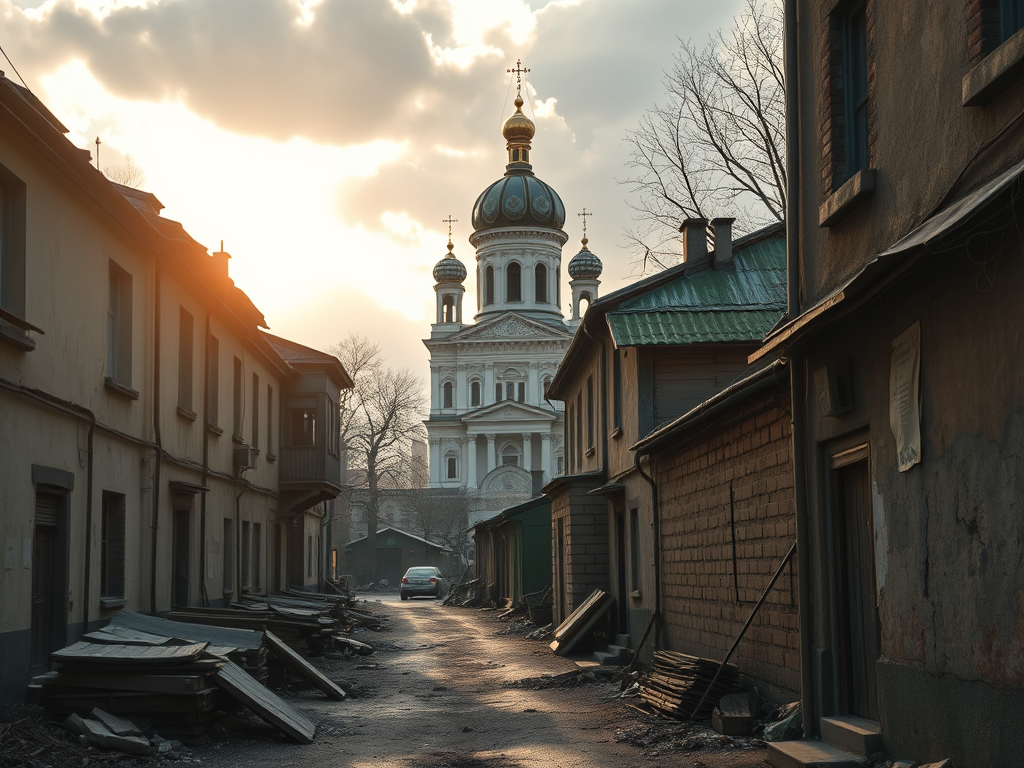
I’ve abandoned all other duties in pursuit of the ending of The Brothers Karamazov. I’m 337 pages in (Part II, Book V, Chapter 5), and up until these last two chapters, the journey has been pure delight. Now I find myself in the chapter where Ivan sits with his younger brother Alyosha, not so much to know him better as he claims, but to unravel his own disdain for what he calls “God’s world.” Ivan cannot accept a world in which innocent children suffer. As he lays out his case, he recounts horrors so vivid and cruel that I had to stop reading more than once. Ivan begins listing the unspeakable harms done to the innocent. His descriptions were so unsettling again, I had to stop reading more than once. The sorrow of it clung to me long after I closed the book. I was relieved when he finally moved on from the graphic litany of human cruelty to a different kind of heaviness: a poem he wrote about Christ and the question of human freedom. Even that was easier to bear than the suffering Ivan refused to accept.
Before reaching these chapters, I had wandered through so much beauty. I fell in love with the elder Zosima, that wise and perceptive man who sees straight through the surface and into the truth of a person. I found myself fully absorbed in the peculiar schoolboy who tried to stone Alyosha, and in the strange, unstable father whose behavior swung wildly between gratitude and agitation. Over and over, Dostoyevsky reveals how often people long for what is good yet collapse under fear or pressure.
I was also delighted when Alyosha and Lise formed their little attachment. Lise’s silliness first made her seem like a frivolous girl, but Alyosha took her love letter seriously instead of treating it like a practical joke. That choice made me love him even more.
The more I read, the more I am struck by Dostoyevsky’s ability to tell the truth. His truth is not merely factual; it is emotional, moral, and spiritual. It is the truth of human duplicity, the wrestling, the ache, the contradictions that live in us. He did this in Crime and Punishment as well. There is something almost startling about how accurately he understands people, their fears, their desires, their pride, their smallness, their nobility. Alyosha’s purity of heart feels real. The elder’s quiet pride, his attempts to imitate holiness through strictness, prayer, and asceticism as if he could earn God’s favor by matching Zosima, feels real too.
And then there is the scandal Grushenka brought. I was completely shocked by what transpired between her and Katerina. I had to stop reading for a moment and take in the rawness of the wound.
All of it feels true. All of it feels real. That is why this book, with all its wrestling and all its sorrow, keeps pulling me in. Dostoyevsky shows us the whole human being: weakness, tenderness, pettiness, longing. None of it is sanitized. None of it is exaggerated. It feels as though he is telling the story of souls rather than characters.
And I cannot help it. I want to see where every one of these souls will land.
If this post spoke to you…
Share it with someone who might need it, too. Whether it’s a quiet encouragement or a new way of seeing things, these reflections are meant to be passed along.

|
Martina Griffin is a Catholic convert, writer, wife, and mother of four. She writes about faith, motherhood, beauty, books, and the quiet ache of transformation. A lover of popcorn, deep questions, and old classics, she shares her heart at Big Bowl of Popcorn—one post at a time. Instagram | Facebook | Email Me |
Don’t Miss a Post
Stories of faith, motherhood, and becoming—delivered straight to your inbox.
Leave a Reply